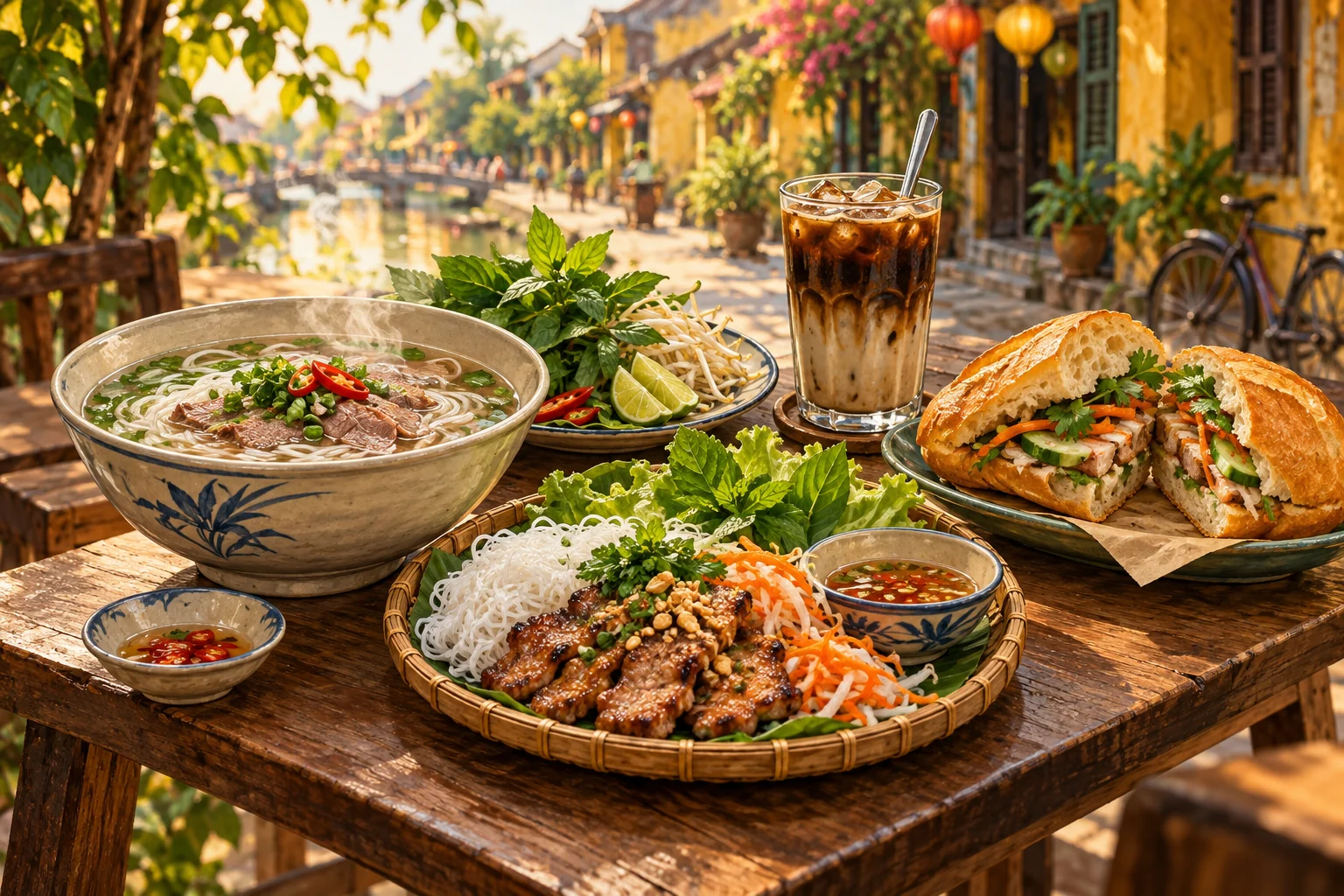
Vietnamese food is a reason to travel slowly. You can learn a great deal by sitting down for one dish, noticing the herbs and condiments and asking how it is normally eaten. This food trail gives you starting points across a few cities, with room to discover your own favourites rather than chase a fixed list of viral addresses.
Hanoi: Start with a bowl, then pause for coffee
Pho and bun cha offer familiar entry points in Hanoi, but the useful experience is how a particular place serves them. Observe the menu and ask about the bowl or portion before ordering. Leave room for coffee afterwards instead of placing every famous dish into one lunch. A food walk can help when you want explanations and the confidence to try unfamiliar stops.
Do not treat the longest queue as the only sign of a worthwhile meal. Location, opening time, the preparation you can see and your own comfort all matter. If there is one dish you particularly want, build a small walking route around it rather than crossing the city repeatedly for several unrelated recommendations.
Hue: Explore smaller portions and distinctive flavours
Bun bo Hue is an obvious starting point, and small dishes such as banh beo provide another way to explore. Ask what is included and how many portions make sense for your group. Chilli, fish-based seasonings and other ingredients can be integral to a dish, so discuss restrictions rather than assuming removing a garnish changes the whole recipe.
A slower meal can fit naturally between historical visits. You do not need to book another distant attraction just because lunch ends early. A café break and a neighbourhood walk create space to appreciate the meal and avoid turning the day into constant transfers.
Da Nang and Hoi An: Let local dishes anchor the day
Try mi Quang in Da Nang and look for cao lau or white rose dumplings in Hoi An as starting points. These suggestions are an introduction, not an exhaustive definition of either city’s cooking. Ask what is prepared fresh that day and which dishes are suitable for sharing. A smaller order leaves room for another discovery later.
A cooking activity can make sense if you want more than a restaurant visit. Read how much time is spent shopping, travelling and actually cooking. Discuss dietary needs before payment and ask whether ingredient substitutions are feasible. A market walk and a cooking lesson are different products even when they appear under the same tour category.
Ho Chi Minh City: Build an evening around a neighbourhood
Banh mi and hu tieu can be useful introductions, with many other choices once you have found your rhythm. A guided evening route can explain ordering and connect a few stops without requiring you to navigate across the city. Ask whether transport is included, how large the group is and how much food to expect.
If exploring independently, choose one area and keep the route walkable where practical. You do not need a reservation at every stop. Allow time to sit, watch the street and decide whether you want another dish. Eating more slowly often makes the city’s food feel less overwhelming and more personal.
Order clearly and discuss ingredients early
Before ordering, ask about portion size, the full price and anything charged separately. Seafood sold by weight deserves a clear agreement on the item, weight and preparation. A photograph of a generous platter is not the same as a price for the quantity your group will receive.
For allergies or strict dietary needs, use a clear translated explanation and confirm it with the person preparing the food. Broths, sauces and shared preparation surfaces can matter even when a dish appears vegetable-based. A menu label alone may not answer the questions that are important to you; choose a setting where you can communicate comfortably.
Make a food-focused itinerary easier to enjoy
Schedule a guided tasting for a day when you can arrive hungry and unhurried. Ask which meals it replaces so you do not book a large lunch immediately beforehand. Include water and a break between stops, and choose food that is prepared and handled in a way you are comfortable with.
Save a few dishes and neighbourhoods in your trip notes, then let the rest of the visit develop naturally. Food is part of the holiday, not an exam with a required score. The most useful souvenir may be understanding one bowl better, remembering a conversation or finding a place you want to return to the next morning.
Further planning and official information
Use these sources for destination context and current operator information. Itinerary and accommodation comparisons above are editorial planning suggestions. Confirm live services, access, prices and terms with the relevant provider.